There is a particular kind of confidence unique to people correcting the word “literally.”
The correction usually arrives instantly.
Sometimes while the original sentence is still hanging in the air.
“I literally died.”
“No you didn’t.”
The exchange allows everybody involved to feel, briefly, that civilisation still has standards.
Because “literally” rightly means:
actually, precisely, without metaphor.
So if somebody says:
“I literally exploded,”
the objection is that they remain visibly un-exploded.
Entirely reasonable.
And, importantly: correct.
Humans are not meant to “literally die” from awkward meetings, minor inconveniences, or unexpectedly attractive baristas.
Words have to mean things. They have specific meanings. When they don’t, civilisation collapses into interpretive dance.
Unfortunately civilisation has once again chosen decline.
Because people have been using “literally” figuratively for centuries. Centuries.
Long enough that dictionaries — cowards that they are — have surrendered entirely and now include the emphatic figurative meaning alongside the original one.
This is obviously ridiculous.
The whole purpose of “literally” was to rescue sentences from ambiguity.
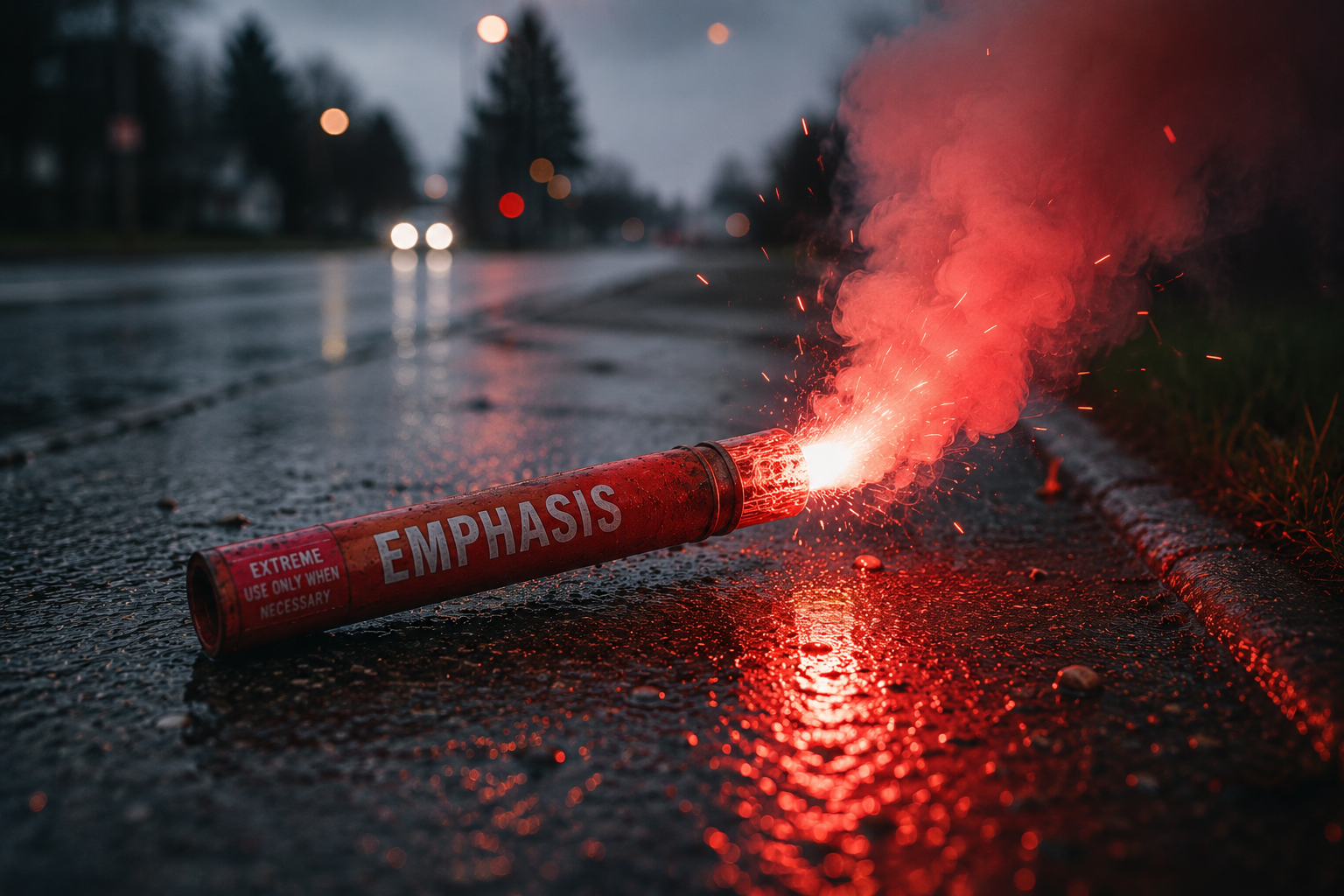
A sort of linguistic emergency flare communicating that ”no metaphor is occurring here.”
But modern usage has transformed it into its own opposite.
We have effectively invented a word that means:
“I am speaking plainly.”
while simultaneously using it to say:
“no, I’m not.”
Of course, nobody hearing “I literally died laughing believes a death certificate will shortly be issued.
Communication succeeds perfectly well.
The correction is therefore not really about comprehension.
It is about principle.
About maintaining some tiny defensive perimeter around the idea that words should continue meaning things.
Even if the perimeter grows smaller every year.
Even if the dictionaries have quietly changed sides.
Even if society now permits sentences like:
“I literally can’t even with you right now.”
which sounds less like communication and more like somebody suffering a medically significant incident.
Anyway.
This is a hill I will die on.
Figuratively speaking.