
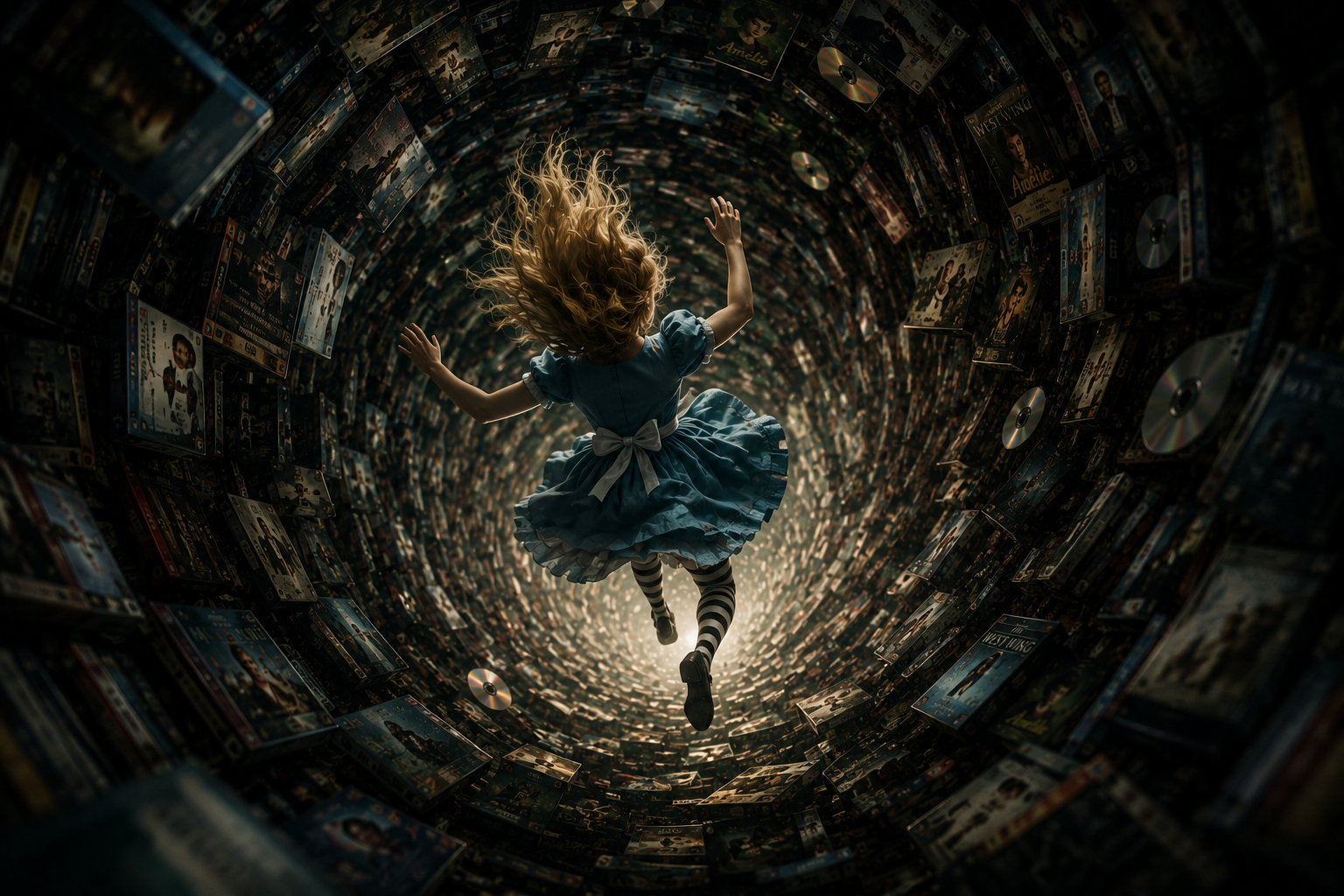
I used to own an enormous CD collection.
Wall to wall.
Three shelves high.
Alphabetised with the intensity of somebody who considered both music and categorisation to be moral activities.
I also owned:
- box sets,
- DVDs,
- a very expensive DVD player,
- and enough physical media to survive several minor technological collapses.
Then came Spotify. Then Netflix. Then the cloud.
And for a while it genuinely felt like the future had arrived.
Every song available instantly. Every film accessible from the couch.
No shelves. No clutter. No scratched discs.
No deciding which CD made the trip into the car.
The future, we were told, was access. Ownership was old-fashioned. Physical media was obsolete.
Why store things yourself when civilisation itself had apparently become the storage device?
So I did what many people did.
I got rid of the CDs. I sold the DVD player and donated the box sets.
Because everything was available to stream.
Then of course it wasn’t.
Shows disappeared and licensing changed.
Films migrated between six competing platforms like confused digital refugees.
And suddenly the thing you wanted to watch required:
- a different subscription,
- a stronger internet connection,
- a rental fee,
- or faith that some executive in Los Angeles would continue considering your favourite television drama commercially relevant.
Which is how I eventually found myself once again owning a DVD player, and another boxed set of The West Wing.
Not because I am nostalgic exactly.
More because I have become suspicious of temporary access masquerading as ownership.
Last night I was at Alice in Videoland — possibly the world’s last surviving DVD rental store, though technically I was there for the attached 28-seat cinema.
Now that I think about it, there is something fitting about stumbling across the theme of this thought while watching The Devil Wears Prada 2 — a sequel about an industry that has always insisted it knows what you should want before you know it yourself.
The remarkable thing is that Alice still works beautifully.
Not despite being old-fashioned. Almost because of it.
It contains:
- blockbusters,
- obscure documentaries,
- boutique arthouse films,
- terrible action movies,
- and the sort of accidental discoveries algorithms continuously promise but rarely deliver.
And it may actually have become faster to walk there, browse the shelves, touch things, read the backs, and choose a film than it is to decide what to watch across eight streaming subscriptions at home.
Which feels backwards technologically, but correct psychologically.
While I was there, I tried describing a trailer I had seen during my previous visit.
“The movie with the tall Australian guy in Wuthering Heights. He’s engaged but then his fiancée shares a secret and everything unravels.”
After perhaps five seconds thought, the guy behind the counter replied:
“Oh, that’s a different guy. You mean The Drama. It’s Robert Pattinson. You’re thinking of Jacob Elordi.”
Which felt, in its own small way, like an argument for humans over machines.
Streaming removed friction.
But it also removed:
- texture,
- limitation,
- locality,
- serendipity,
- and the quiet warmth of human curation.
At Alice, somebody recommends a film because:
“if you liked that, you might enjoy this.”
Streaming platforms recommend films because:
“CONTENT CORRELATION DETECTED.”
These are not emotionally identical experiences.
The strange thing is that physical media now feels less like clutter and more like certainty.
Not superior or morally pure. Just dependable in a way modern digital systems increasingly are not.
A DVD on a shelf does not:
- leave the platform,
- require Wi-Fi,
- rotate out of the catalogue,
- prompt a subscription increase,
- or contain advertisements for podcasts you will never voluntarily listen to.
It simply remains there.
Waiting patiently.
Like infrastructure.
Which is perhaps why, while Joy and Brian were away for the long weekend recently, I found myself doing exactly what someone with infinite streaming options naturally does.
Rewatching The West Wing. On DVD.
Again.
Though admittedly this did require spending a frustrating amount of time searching for the DVD remote control because the player itself — in what I can only assume was a moment of extraordinary industrial optimism — does not actually feature a play button.
Which feels strangely symbolic of the entire situation.
The old systems still work.
Mostly.
But only if you can locate the remote.
Anyway.
It was Stanley Tucci all along.