
The word “testify” derives from Ancient Roman courtrooms, where men swore oaths while holding their testicles.
Testicles were considered a sacred symbol of masculinity, honour, and truthfulness. To “testify” therefore literally meant bearing witness via one’s testes.
Which, let’s be honest, sounds exactly like the sort of thing Romans would do.
The entire civilisation often reads less like history and more like a group chat that accidentally conquered Europe.
Etymologically speaking, however, this origin story is utter bollocks.
There is no credible evidence Roman legal proceedings involved ceremonial ball-handling.
While “testify,” “testimony,” and “testicle” do appear to share ancient Latin roots connected to the word testis, linguists largely regard the story as folklore:
a wonderfully memorable explanation retrofitted onto a much messier reality.
Which turns out to be true of an alarming number of famous word origins.
In fact the next time you hear somebody begin a sentence with:
“Well, actually…”
they are almost certainly about to tell you a story about which they are charmingly wrong.
For example:
“OK comes from the Greek óla kalá.”
Probably not.
“‘Rule of thumb’ comes from a law allowing men to beat their wives with sticks no thicker than their thumb.”
Almost certainly not.
“‘Pulling your leg’ was Victorian pickpockets tripping victims while their accomplice robbed them.”
Probably not that either.
“‘POSH’ stood for ‘Port Out, Starboard Home.’”
No evidence whatsoever.
“‘Golf’ means ‘Gentlemen Only, Ladies Forbidden.’”
Absolutely not.
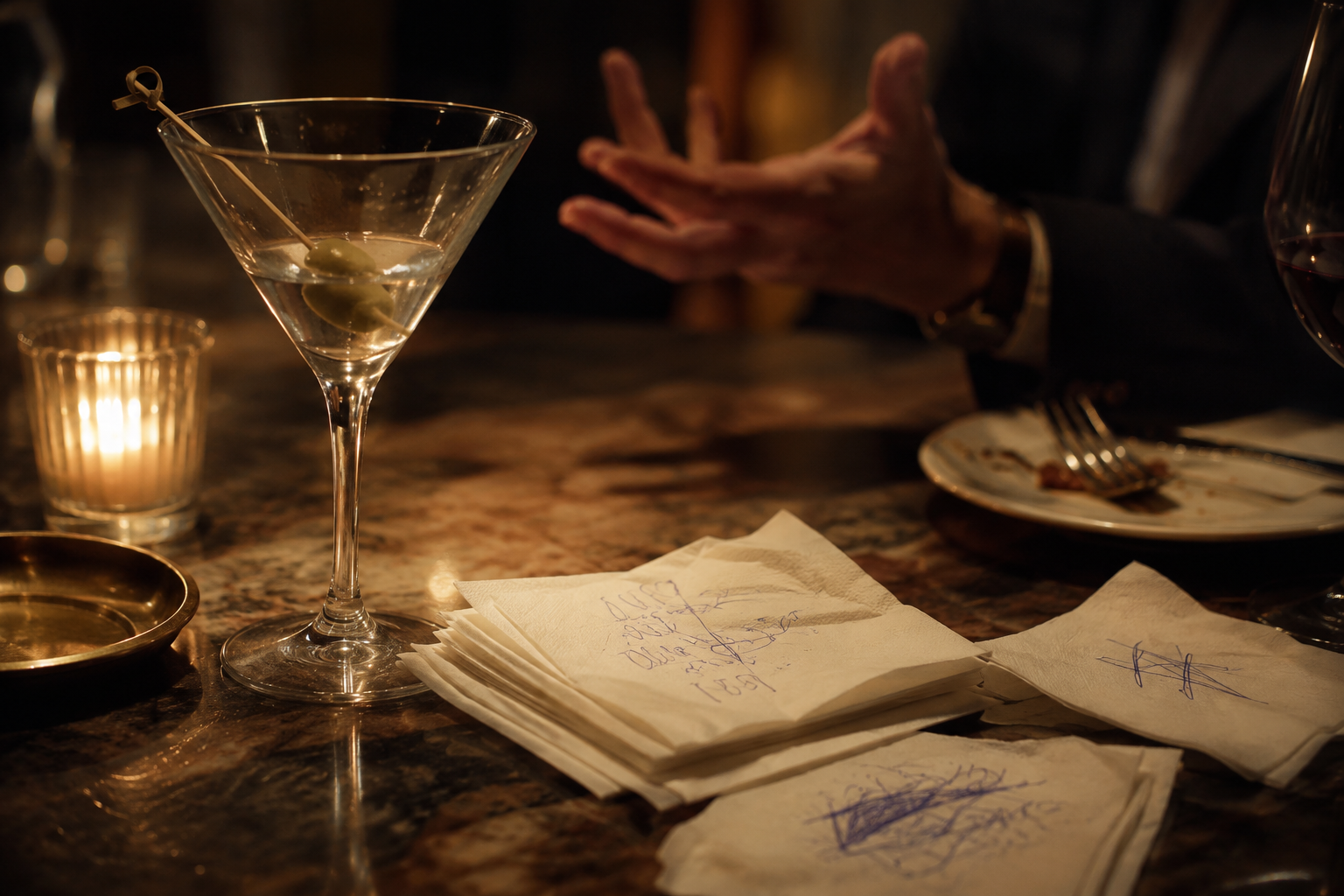
The bore who has cornered you at the cocktail party telling you these stories is almost certainly not being malicious or even inherently stupid.
He is demonstrating something profoundly human.
We are irresistibly drawn to explanations that are tidy, slightly shocking but plausible, and easy to repeat after two drinks.
Particularly if they involve sailors, executions, the Victorian era, or unexpectedly formal references to genitals.
The real origins are usually much less satisfying.
“OK,” for example, appears to have emerged from 1830s American newspaper humour in which deliberately misspelled abbreviations briefly became fashionable.
Which means one of the most successful words in human history may ultimately derive from a nineteenth-century newspaper joke that is not remotely funny by modern standards.
Which somehow feels exactly right.
Words drift.
Meanings soften.
Spellings mutate.
People mishear things for centuries.
Then eventually somebody invents a much better explanation and humanity collectively decides to keep that one instead.
Not because it is true.
Simply because it is more entertaining.
Anyway.
The kangaroo thing is wrong too. Just smile and nod.