
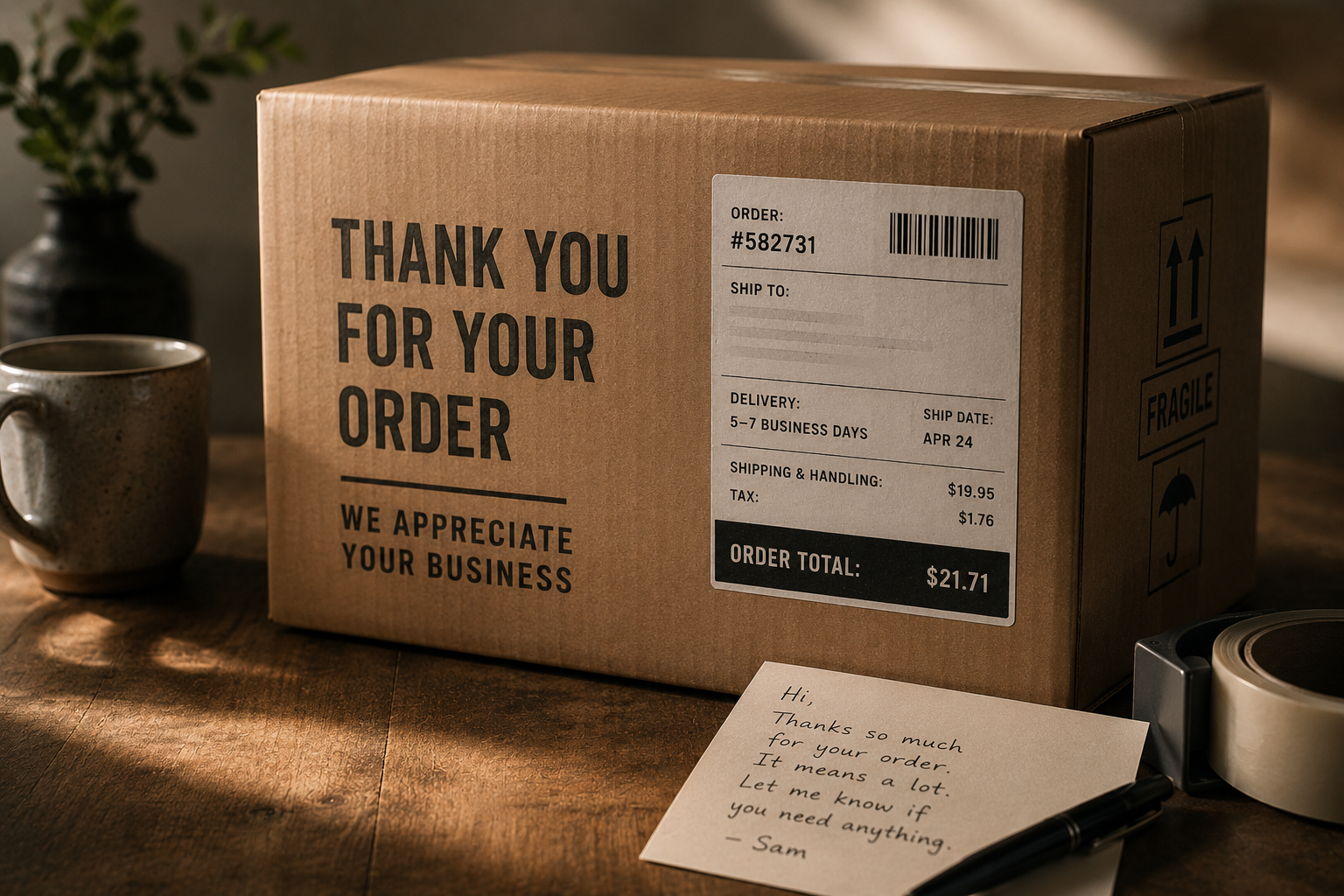
I do not object to paying for shipping.
I object to feeling processed.
These are not the same thing.
Human beings will tolerate astonishing levels of inconvenience provided the system surrounding the inconvenience appears coherent, sincere, and proportionate.
We will:
- queue patiently,
- pay premium prices,
- wait weeks for handmade objects,
- drive across cities,
- and voluntarily interact with French furniture stores.
But the moment a system reveals itself to be generic, emotionally absent, or administratively cynical, something shifts instantly.
The relationship changes.
You no longer feel served. You feel handled.
This is why a suspiciously flat shipping fee can produce disproportionate irritation.
Not because twenty dollars matters particularly. (Although, as the t-shirt says “20 bucks is 20 bucks.”)
But because the fee quietly communicates:
“you are now moving through the system.”
Not as a person.
Not even as a customer.
As throughput.
Processed meat moving along a conveyor belt of:
- automated checkout flows,
- abandoned cart emails,
- convenience fees,
- dynamic pricing,
- and carefully workshop-tested corporate friendliness.
This may also explain why some people — myself included — will still deliberately choose a staffed checkout over self-service despite self-checkout often being objectively faster.
Not because scanning groceries is especially difficult.
But because the interaction, however minor, still preserves the illusion that commerce is occurring between human beings rather than between a barcode and an inventory management platform.
Which perhaps makes the existence of “closed” self-checkout kiosks one of the more quietly absurd developments of modern civilisation.
A machine designed specifically to remove human labour somehow still requiring administrative permission to exist.
Like discovering your toaster has business hours.
The modern economy increasingly optimises for frictionless transactions while accidentally removing nearly every trace of humanity from the transaction itself.
This is what makes genuinely thoughtful interactions feel almost shockingly memorable now.
A handwritten note.
A sensible shipping quote.
A business owner replying like an actual human being.
Someone quietly solving a problem without escalating it into a process.
Increasingly, civilisation appears to depend less on efficiency than on the preservation of small signals indicating that nobody involved has fully surrendered their soul to the administrative machine.
Anyway.
Add to cart.