
There’s something uniquely liberating about being the middle child.
And generationally speaking, that’s Gen X.
Sandwiched between the Boomers and the Millennials, we are famously resourceful, adaptable and self-sufficient. Because of this, we were largely expected to get on with things independently. We were allowed to just get things done.
We now prefer it that way.
We’ve also always had a suspicious relationship with bluster and unnecessary ceremony, and coming out sometimes seems to have become exactly that.
A celebration of visibility.
For me, it felt less like a declaration and more like a correction.
Not:
“Behold. Here is my truth.”
More:
“No, you’ve misunderstood.”
Now, I have no intention of minimising anyone’s coming out story.
Some are dramatic, even traumatic.
Some involve years of fear, shame, secrecy and carefully managed risk.
Others consist largely of somebody saying:
“Oh… Don’t tell your father.”
Either way, the ritual existed for a reason, because for a very long time assumptions about sexuality carried real-life consequences in families, in workplaces, and occasionally in the emergency room.
Coming out wasn’t always a lifestyle choice.
It was risk management.
And for many, it still is.
I can still remember coming out to myself.
Not the year, the moment.
School holidays.
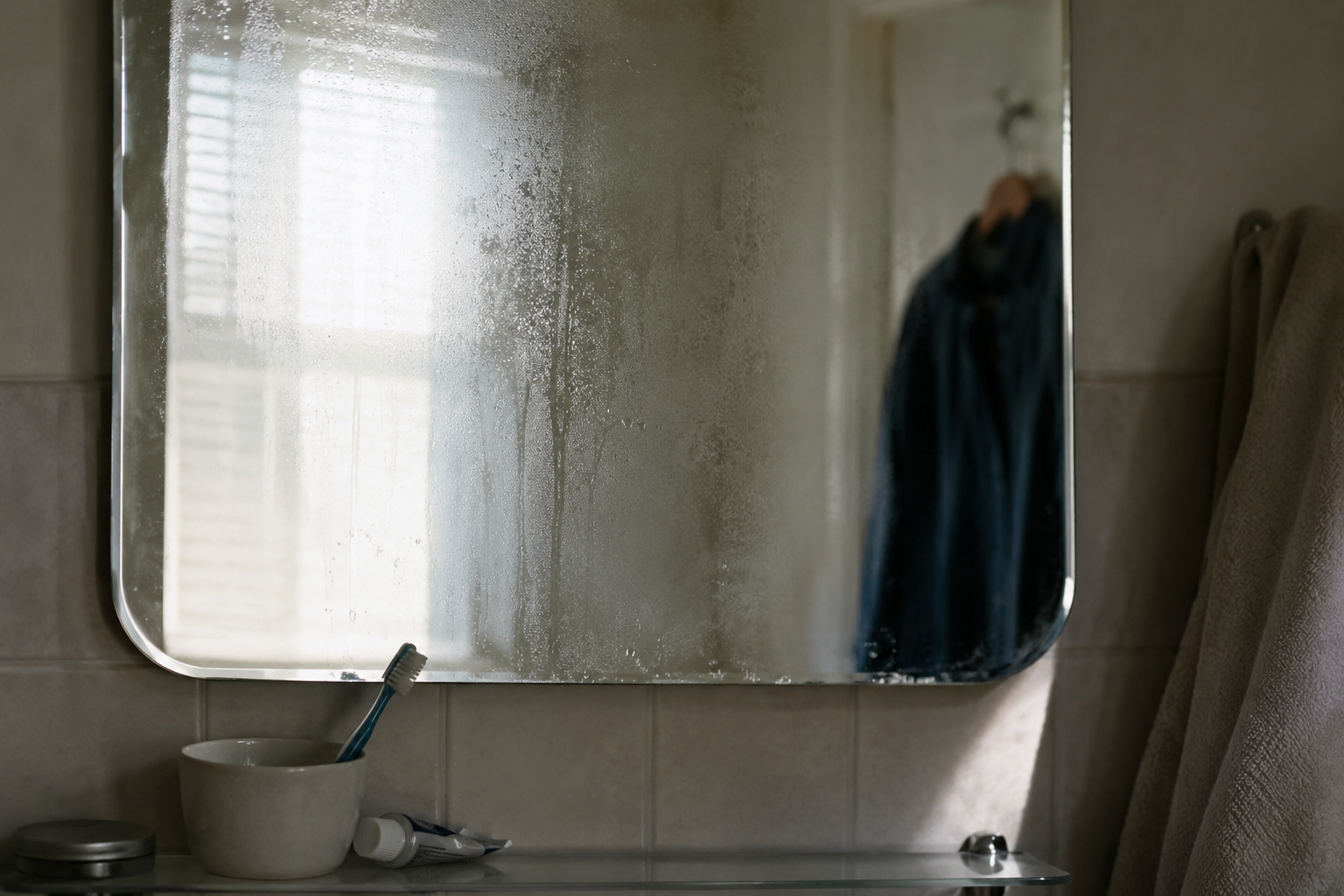
Standing in front of the bathroom mirror.
I can even remember what I was wearing.
A memory that has somehow survived while considerably more useful information has disappeared entirely.
I remember looking at myself and saying the words out loud for the first time.
“I’m gay.”
Not triumphantly, and certainly not with a soundtrack. More like a timid, slightly resigned sigh. The sort of conclusion reached after reviewing all the available evidence.
The hardest audience was never anybody else.
The hardest audience was me.
First we come out to ourselves.
Then to the people who mattered.
And finally we let everybody else in on the secret as necessary.
The first person I ever told I was gay was a friend. And he was a man I wanted to sleep with. Which perhaps tells you something about how I understood the assignment. The reason it mattered wasn’t political. I was simply trying to calculate the odds of success.
It was only recently that I discovered “coming out” originally had less to do with emerging from hiding and more to do with being introduced into society.
And it was that discovery that finally made sense of all of it for me.
Because my own coming out was to a succession of different audiences, culminating in the group of people I was trying to be part of.
Joy and I used to travel up from Dunedin fairly regularly and would almost always spend an evening at G.A.Y. While it was never the reason for the trip, it was always a highlight for me.
We would sit in a corner booth, my cap pulled so low it was practically a witness protection programme while she encouraged me to get up and dance.
Over time the cap disappeared.
More importantly, I stopped feeling like a visitor and started to enjoy being recognised.
I had been introduced into society.
Like a debutante being presented at Court.
Albeit one wearing a baseball cap rather than a white frock.
Which leaves me slightly puzzled by some newer coming-out stories.
Not offended. Not opposed. Just puzzled.
I found myself thinking about this recently when a friend shared a story to Facebook celebrating a rugby player coming out.
The comment section was exactly as supportive as you would expect. References to courage, visibility and progress were abundant.
And perhaps rightfully so. Perhaps.
But if I’m honest, my own reaction was closer to:
“Good for him.”
And I know this sounds more dismissive than I intend it to, but it has survived ten rounds of edits nonetheless.
So perhaps my indifference is not evidence of apathy, but evidence of success.
The current sentiment seems to be:
“Wouldn’t it be nice if nobody needed to come out at all?”
While at the same time applauding public examples of people doing exactly that.
Indisputably, the majority of people are straight, and so those of us who are not will occasionally want to correct innocent assumptions.
And sometimes we won’t care enough to make the correction.
My real hope is that those corrections eventually stop being significant events.
A world where this conversation happily exists:
“What’s your girlfriend’s name?”
“Barry.”
“And what does Barry do?”
Conversation continues.
No glitter ball. No soundtrack. No choir of drag queens.
No press release.
Just updated information received and processed.
I really don’t remember the dream ever being that nobody would need to come out.
But that nobody would care when we did.
Or more precisely: that nobody would care in the places where it never should have mattered in the first place.
In employment and housing.
Safety and respect.
And that it would remain relevant in the places where it always belonged:
Dating and potential nakedness.
If that occasionally leaves people wondering why anybody ever needed to come out in the first place?
Well then good.
That was rather the idea.
Anyway.
Chad wasn’t gay.