
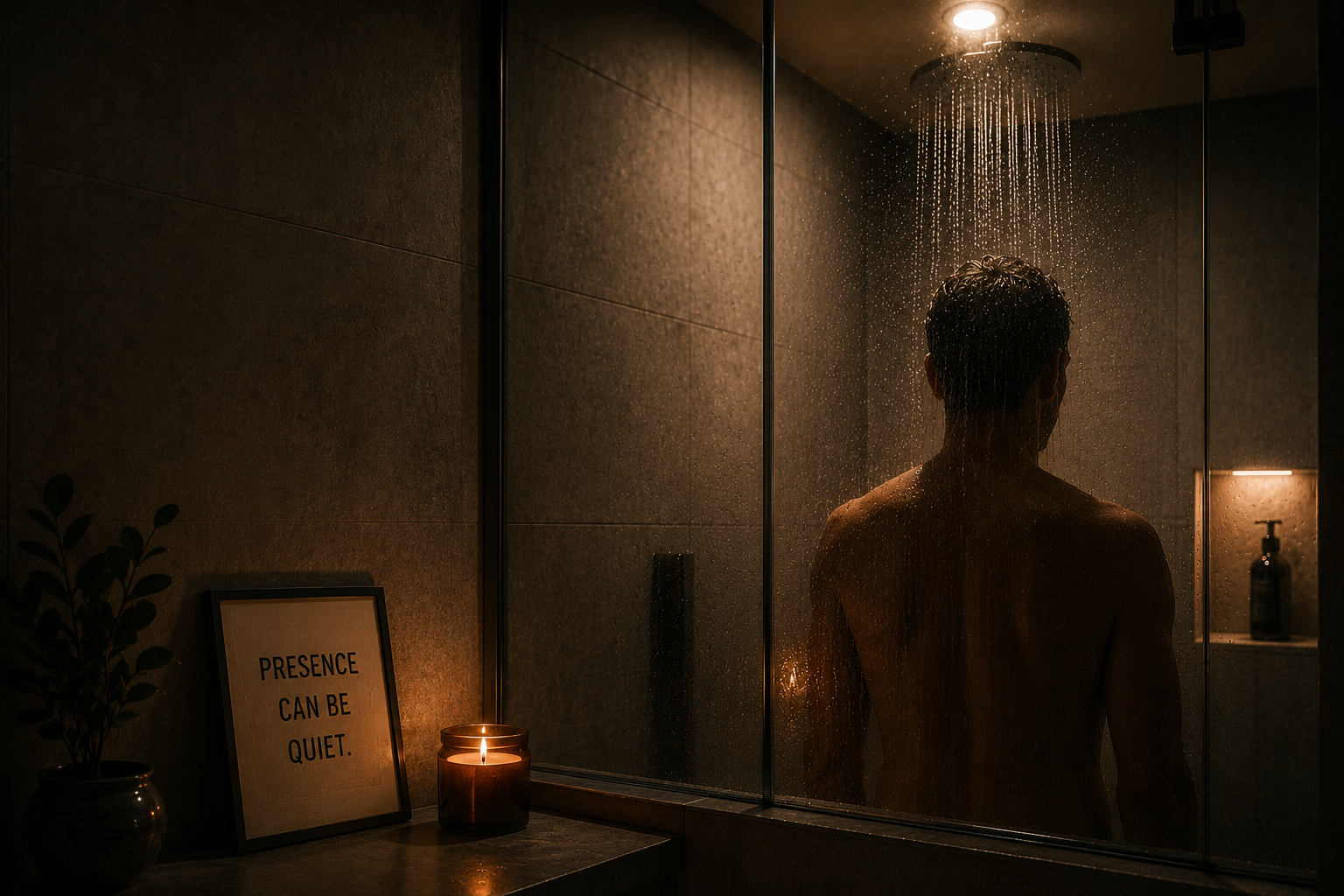
For a surprisingly long period, the bathroom lights would occasionally turn themselves off while I was in the shower.
Not because the system was malfunctioning. Because it was functioning exactly as designed.
The motion sensor simply concluded that no movement meant no person.
Which, to be fair, is often true.
The problem is that showering (and having a poo) are among the few remaining environments in modern life where human beings are regularly perfectly still for extended periods while thinking about:
- mortality,
- old conversations,
- administrative failures,
- whether they sounded too sharp in an email three days ago,
- and if Cleopatra would have understood Bluetooth.
The sensor interpreted this stillness as absence.
This felt philosophically rude.
The eventual solution was replacing the motion sensor with an occupancy sensor capable of understanding that someone can remain physically motionless while still being psychologically very busy.
This now allows the lights to remain on while I quietly contemplate existence beneath warm water.
Which feels, in its own small way, like progress.
The interesting thing about infrastructure is that it quietly embeds assumptions about what counts as meaningful human behaviour.
Motion sensors assume usefulness looks like movement.
But large parts of modern life increasingly make similar assumptions:
- productivity software measuring activity rather than thought,
- open-plan offices assuming collaboration is inherently superior to solitude,
- read receipts treating silence as something requiring explanation,
- social media systems equating engagement with value,
- customer service systems assuming persistence correlates with legitimacy,
- and “Are you still watching?” quietly suggesting that inactivity is probably accidental.
Even architecture does this.
Airport seating assumes temporary occupancy rather than comfort. Benches with central armrests quietly discourage lingering. Smart lighting systems assume rooms exist primarily to be passed through efficiently rather than inhabited slowly.
Infrastructure always contains a model of the human being it expects to encounter.
The bathroom sensor simply made the assumption unusually visible.
No movement detected. No person present. No meaningful activity occurring.
And yet some of the most important things human beings do involve remaining very still:
- thinking,
- grieving,
- remembering,
- processing,
- recovering,
- or quietly reorganising themselves beneath hot water.
The occupancy sensor turned out to embody a slightly more generous philosophy.
Not:
movement equals existence
but:
presence can be quiet.
Increasingly, I suspect the distinction matters.
Anyway.
The bathroom now permits peace.